


Companies are currently handling large volumes of data on a daily basis. Customer information, financial data, and all other data are the engines of any business development.
According to the Flexera State of the Cloud Report, 73% of businesses have already implemented some type of hybrid cloud to support their growing data requirements.
This figure is ever-increasing with the number of companies discovering the usefulness of this technology.
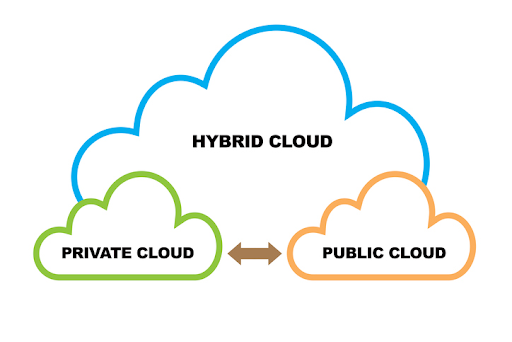
A hybrid cloud offers the best of both worlds. It combines the flexibility of the public platform with the speed and control of the private systems. It helps teams store, retrieve, and secure their data with less effort. The appropriate arrangement can even save money and improve performance.
We will consider eight intelligent applications of hybrid cloud to manage data effectively and safely.
Table of Contents
1. Balance Between Public and Private
One of the biggest benefits of a hybrid cloud is the ability to balance your data storage, you can store sensitive information in private servers and less sensitive information in public servers.
This arrangement simplifies data management. It provides businesses with additional freedom to choose the destination of their data. Public storage is used in many businesses to provide scalability and control over private storage.
Optimize Costs with Hybrid Cloud
You save more space when you save large amounts of data on shared servers. You can save personal servers on files that require additional security. This clever combination of the two systems would save money and increase efficiency.
2. Accelerate Team Data Access
Quick access to information is a crucial factor in the smooth operation of a business. Hybrid cloud enables this by connecting various environments. Both types of clouds allow teams to retrieve files in a short time.
This relationship ensures that all people can work with the same updated files. It eliminates confusion and maintains workflow continuity. The greatest beneficiaries are businesses that involve time-sensitive information.
In a hybrid cloud, files can be shared in real time by teams located in various locations. This makes working a smooth experience. It minimizes downtime and enables projects to run efficiently without relying on a single local server.
3. Improve Data Backup and Security
Security is a significant issue for every business. Hybrid cloud is also useful in enhancing safety because it provides you with flexibility in the way and location of data storage. Confidential information can be stored in private systems, while less important files can be stored in public ones.
Backups are also easier with a combination of the two. In case a local server fails, your cloud system continues to protect your data. This minimizes the possibility of losing important information.
The major security benefits are:
- Access that is secured and identity verified.
- Automatic backups are performed regularly.
- Fast response to system failures.
4. Manage Big Data More Effectively
Companies are now handling large amounts of data from various sources. This is managed with the help of a hybrid cloud, which provides storage that expands with your needs. Capacity can be increased without the need to purchase new physical equipment.
Scalable storage means that your data remains in order and can be accessed easily. It also enables improved analytics, which enables you to make decisions faster based on new insights.
Advantages of working with big data using a hybrid cloud:
- Scaling fast during peak periods.
- Reduced load on internal servers.
- Less challenging data tracking and reporting.
5. Simplify Disaster Recovery
Hardware failures or power outages can occur at any time, posing significant disasters. In a hybrid cloud, you are able to secure your data against such risks. It makes safe copies of your files, which can be easily recovered.
A lot of hybrid systems contain built-in disaster recovery tools. Such tools enable one to restore data in real-time without disturbing the workflow. Businesses do not lose time or information to continue operating.
Develop a Reliable Backup Strategy
You can schedule the locations of your backups and the frequency of updates. For example, keep the main data of stores on private servers and replicate it to public cloud storage. This balance ensures that your information is secure and accessible at all times.
6. Remote Work and Mobility
The current flexible work culture requires teams to have access to files at any time. This is made easy by a hybrid cloud, which links users regardless of their location. Employees can access the same information safely through laptops, phones, or tablets.
This flexibility enables teams to remain productive even when they are not in the office. It also facilitates quicker decision-making, as updates are real-time throughout the network.
The reason why hybrid cloud is effective with remote teams:
- Live information synchronization between devices.
- Authorized user sign-in security.
- Facile interdepartmental cooperation.
7. Empower Smarter Analytics and Insights
Information is useful when it becomes insight. Hybrid cloud provides companies with the ability to process big data sets in a short time. It links data across various sources, which enables more precise outcomes.
By having better analytics, teams will be able to anticipate trends and enhance planning. It is also useful in designing superior customer experiences by analyzing usage patterns.
Make Data Work to Grow Business
Hybrid systems enable you to integrate internal reporting with cloud-based analytics. This will help you view the bigger picture and make smarter business decisions more efficiently.
The Key Takeaway
The hybrid cloud has emerged as a powerful tool for modern data management. It provides businesses with increased flexibility, enhanced security, and enhanced performance. It provides a balance between managing personal storage and scaling shared systems.
The wise use of hybrid cloud enables businesses to save their data and remain economical. It helps teams to work anywhere and keep information secure in case of outages or disasters.
The hybrid cloud will continue to gain value as the amount of data increases. Those businesses that embrace it early will have an easier time running their business and have greater control over their online assets. The hybrid cloud is the beginning of the future of smart data management.