


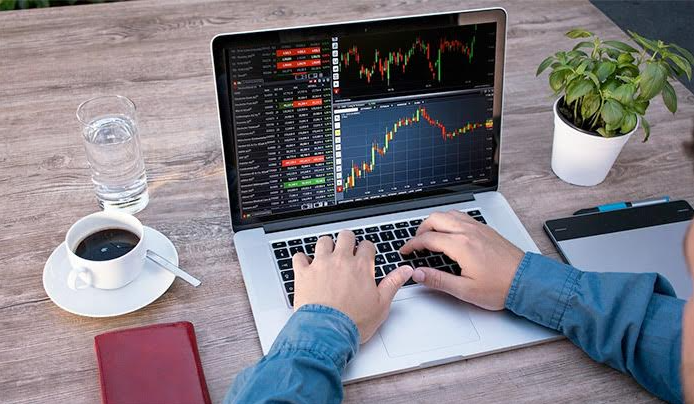
There’s a difference between understanding something in theory and experiencing it in real life. That gap becomes quite noticeable when people in the UK begin exploring Forex trading, because what seems straightforward at first often feels more layered once you actually start.
At a glance, it looks simple. You open a chart, see price moving, and decide whether to buy or sell. But after a few attempts, it becomes clear that the process isn’t just about direction. It’s about timing, decision-making, and how you respond when things don’t go as expected.
It starts simple, but doesn’t stay that way
Most beginners begin with a basic understanding. Price goes up or down, trades are placed, and outcomes follow. That early stage can feel manageable, especially when everything is new and there’s curiosity driving the process.
But once you spend more time with it, you begin to notice that price doesn’t move in a straight line. It pauses, reverses, and sometimes behaves in ways that don’t seem to match your expectations. This is where Forex trading starts to feel less predictable and more dependent on observation rather than assumption.
That shift can feel uncomfortable at first, but it’s also where real understanding begins.
Decisions are rarely as clear as they seem
When looking at past charts, everything appears obvious. Trends are visible, turning points stand out, and it’s easy to say where a trade should have been taken. But in real time, those same decisions don’t feel as clear.
In Forex trading, this is where a practical mindset becomes useful. Instead of trying to be certain, the focus shifts to making decisions that are reasonable based on what is currently visible.
Time constraints change how trading is approached
One thing that stands out for many people in the UK is how trading fits around existing routines. Work, commuting, and personal responsibilities mean there isn’t always time to sit and watch charts throughout the day.
Because of this, the approach often becomes more selective.
Rather than reacting to every movement, traders begin to focus on specific times. This might be early in the morning before work, or later in the evening when things are quieter. That limitation, instead of being a disadvantage, can actually lead to better habits.
In Forex trading, having less time often means being more intentional. There’s less room for impulsive decisions and more emphasis on clarity.
Not every trade matters as much as it feels
At the beginning, each trade can feel significant. A win feels like confirmation that things are working, while a loss can feel like something went wrong. That emotional weight can make the process feel more intense than it needs to be.
For UK traders, this often brings a sense of balance. Forex trading becomes less about reacting to each outcome and more about following a process that can be repeated.
Simplicity often works better in practice
It’s easy to assume that more tools and more information will lead to better decisions. Charts can become filled with indicators, and strategies can become more complicated in an attempt to gain clarity.
But in practice, this often creates the opposite effect.
Too much information can make it harder to focus. Decisions become slower, and confidence starts to depend on multiple signals aligning at the same time. Simplifying the approach tends to reduce that pressure.
In Forex trading, clarity often comes from doing less, not more. Focusing on a few key ideas and applying them consistently usually leads to better understanding over time.
A more grounded way to look at it
In the end, a practical view of trading is less about chasing ideal results and more about understanding how the process actually feels day to day. It includes uncertainty, variation, and moments where things are not entirely clear.
But it also includes structure, learning, and gradual improvement.
For UK traders, approaching Forex trading in this way often makes it more manageable. It becomes something that fits into real life, rather than something that requires everything else to be adjusted around it.
And once that perspective settles in, the process tends to feel a lot more balanced.