


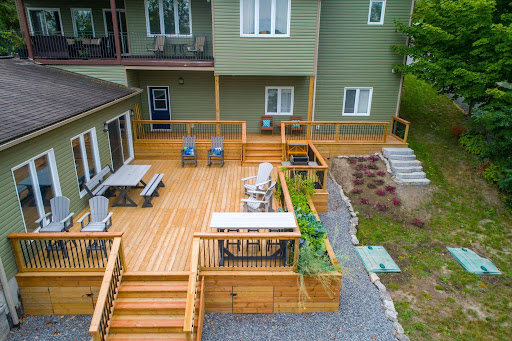
Decking material is one of the more consequential decisions in a backyard project, since it shapes both how the space looks on installation day and how much maintenance it demands for the next twenty years. Composite, redwood, and heavy timber each carry genuinely different trade-offs around cost, appearance, and upkeep, and understanding those differences before ordering avoids a common regret: a deck that looked right in the sample but turned out to be the wrong material for the actual site and climate. Taking the time to weigh these trade-offs against the specific climate and use pattern of a property pays off well beyond the installation itself.
Table of Contents
Comparing the Main Material Categories
Composite decking, made from a blend of wood fiber and recycled plastic, resists fading, staining, and warping with minimal upkeep, but carries a higher upfront material cost and a more manufactured appearance compared with real wood. Redwood offers natural rot and insect resistance along with a warm, traditional look, but requires periodic staining or sealing to maintain both its color and weather resistance over time.
Owners weighing a heavier structural option often land on custom timber decks for a look and scale closer to a timber frame building than a standard residential deck.
What Actually Drives Long-Term Maintenance
- Sun exposure, since UV degradation is the primary driver of fading and surface wear on any wood decking.
- Ground-level moisture and drainage beneath the deck, which affects rot risk regardless of material.
- Foot traffic and furniture load, which wears finish coatings faster in high-use areas.
- Regional climate extremes, since freeze-thaw cycles stress wood joints differently than a consistently warm, dry climate.
Matching Material to Climate and Use Pattern
A composite deck in a consistently sunny, hot climate performs differently than the same material in a humid, shaded yard, where mold and mildew resistance become more relevant than fade resistance. Redwood tends to perform best in drier climates where its natural rot resistance is not constantly tested by standing moisture.
Why Heavy Use Areas Deserve Extra Thought
Decks that see heavy daily use, entertaining spaces, areas near a pool, benefit from materials chosen for durability under wear rather than material chosen purely for initial appearance, since the deck that looks best on installation day is not always the one that looks best five years later.
Working With Builders Who Know Local Conditions
Because material performance varies so much by climate and use pattern, custom deck builders familiar with regional conditions can flag issues, drainage, sun exposure, freeze-thaw stress, that are easy to overlook when choosing a material based on showroom samples alone.
Planning the Substructure, Not Just the Surface
The visible decking gets most of the attention, but the substructure underneath, joists, footings, ledger connections, determines how long the whole structure lasts regardless of surface material. Skimping on substructure quality to afford a premium decking surface is a trade-off that tends to backfire within a decade.
Sampling Materials Before Committing
Requesting physical samples of composite, redwood, and timber decking, and viewing them outdoors under actual sunlight rather than indoor showroom lighting, often changes a homeowner’s initial preference once true color and texture become clear.
Accounting for Local Building Codes
Deck height, railing requirements, and structural load ratings are all subject to local building code, so confirming these requirements before finalizing a design avoids a failed inspection and costly rework after construction has already started.
Planning Lighting Into the Original Design
Wiring for step lights, post lighting, or overhead string lights is considerably easier to route during initial construction than to add afterward, so raising this early with a builder avoids a more invasive retrofit down the line.
Getting Multiple Quotes for Comparison
Comparing at least two or three detailed quotes, not just a rough estimate, helps surface differences in material grade, substructure specification, and warranty terms that a single quote alone might not make obvious.
Final Thoughts
There is no universally correct decking material, only the material best matched to a specific climate, use pattern, and maintenance tolerance. Weighing those factors before installation avoids the common regret of a deck that looked perfect in the sample but was wrong for the site.