


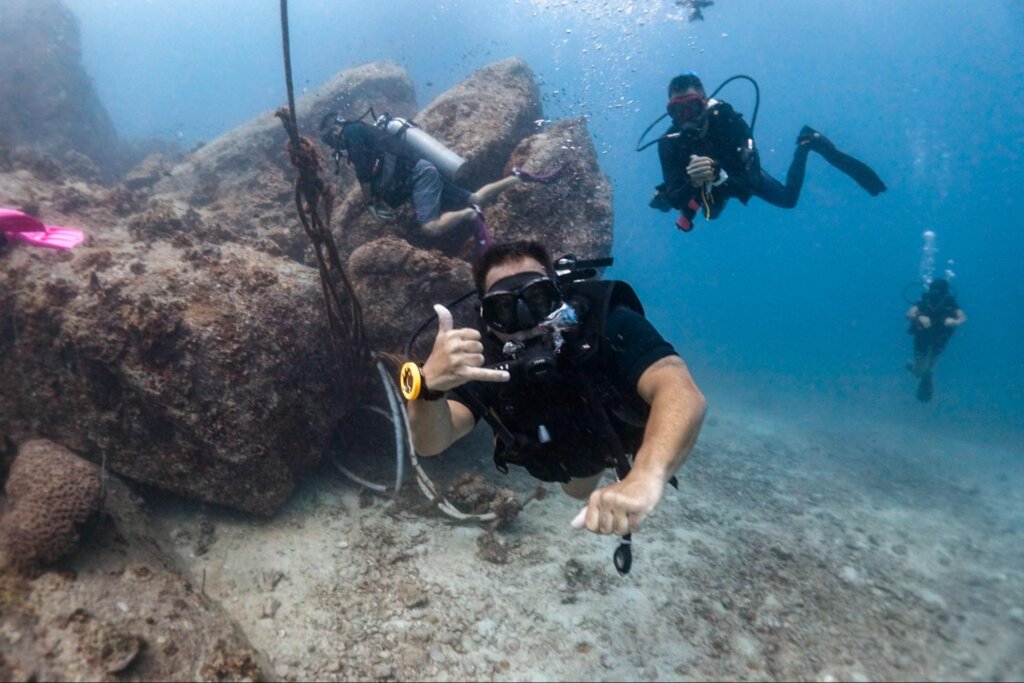
More than 500,000 tourists visit Koh Tao each year, and most of them arrive thinking the hardest part will be breathing underwater. It is not. The hardest part is slowing down enough to do the pre-dive safety check properly before every single dive. That check is called the BWRAF scuba check, and whether you are doing your Open Water course at Japanese Gardens or heading out on a fun dive from Mae Haad pier, it happens before you enter the water every single time.
Understanding BWRAF: The Five-Step Check That Happens Before Every Dive
BWRAF is the pre-dive safety acronym taught across PADI Open Water courses worldwide. It stands for Buoyancy, Weights, Releases, Air, and Final Check. Each letter represents one step in a systematic inspection of both your own equipment and your dive buddy’s gear before entering the water.
The check is also known as the dive buddy check and is designed to catch equipment issues before they become problems at depth. Let’s break down what each letter stands for.
-
B — Buoyancy Control Device or BCD
First, check your buddy’s BC. Make sure the low-pressure inflator hose is securely attached, and along with that, test that the BCD inflates and deflates properly. A BCD that fails underwater affects your ability to control depth and ascend safely.
-
W — Weights
Check that your buddy’s weight system is secure and that the weights are evenly distributed. If they are using a weight belt, confirm it has a right-hand release. If the weights are integrated into the BCD, make sure they are locked in properly. Forgetting weights or having them incorrectly positioned is one of the most common mistakes first-time divers make.
-
R — Releases
Check all buckles, clips and quick-release fastenings on your buddy’s kit. Every release must be functional, usable, and secure. In an emergency, you or your buddy may have to remove gear quickly, so it is important to know exactly where each release point is.
-
A — Air
Ask your buddy to breathe from their primary regulator while you watch the pressure gauge needle. If the needle moves, the tank valve may not be fully open. Also, breathe from the alternate air source to confirm it is delivering air cleanly. Briefly smell and taste the air; it should be completely neutral, with no odour or flavour.
-
F — Final Check
Confirm that both you and your buddy have all the necessary equipment in place:
- Mask and fins secured
- Dive computer powered on and set correctly
- Compass attached if necessary for the dive
- Any special equipment for night diving or deeper diving was considered
- Both divers mentally and physically ready to descend
Why Buddy Check Diving Is Your First Line of Defence Underwater
Buddy check diving is not simply a formality taught during certification; it is a structured habit that protects both divers on every single dive.
When you complete the BWRAF scuba steps with your buddy, you are doing three things simultaneously:
- You are verifying that all gear is functioning correctly.
- You are familiarising yourself with your buddy’s equipment configuration so you can locate their air source or releases in an emergency.
- You are establishing a moment of clear communication before the dive begins, which builds the basic trust that makes buddy diving effective.
Skipping the check, even once, removes all three of those layers of protection at the same time.
What Mistakes Should You Avoid During the Buddy Check
Even trained divers fall into habits that reduce the effectiveness of the check. The most common mistakes include:
- Rushing through the steps because the group is ready or the boat is waiting
- Only checking your own gear rather than inspecting each other’s equipment
- Skipping the air taste and smell test, which can indicate a contaminated tank air
- Forgetting to test the alternate air source, which is the first thing you reach for in a shared-air emergency
- Not confirming the final OK verbally or with a hand signal before descending
Each of these shortcuts has appeared as a contributing factor in preventable dive incidents documented in DAN safety records.
Wrapping It Up
Scuba diving in Thailand is an incredible experience, but the quality of every dive starts before you enter the water. The BWRAF scuba check is a five-step process that takes under three minutes, and those three minutes are what separate a well-prepared diver from one who is hoping things go right by chance.
Building the habit of buddy check diving on every single dive, regardless of how familiar the site is or how experienced your buddy appears, is what consistent safe diving actually looks like in practice. The ocean rewards prepared divers. Make the check non-negotiable, and it will quickly become second nature before every descent.