


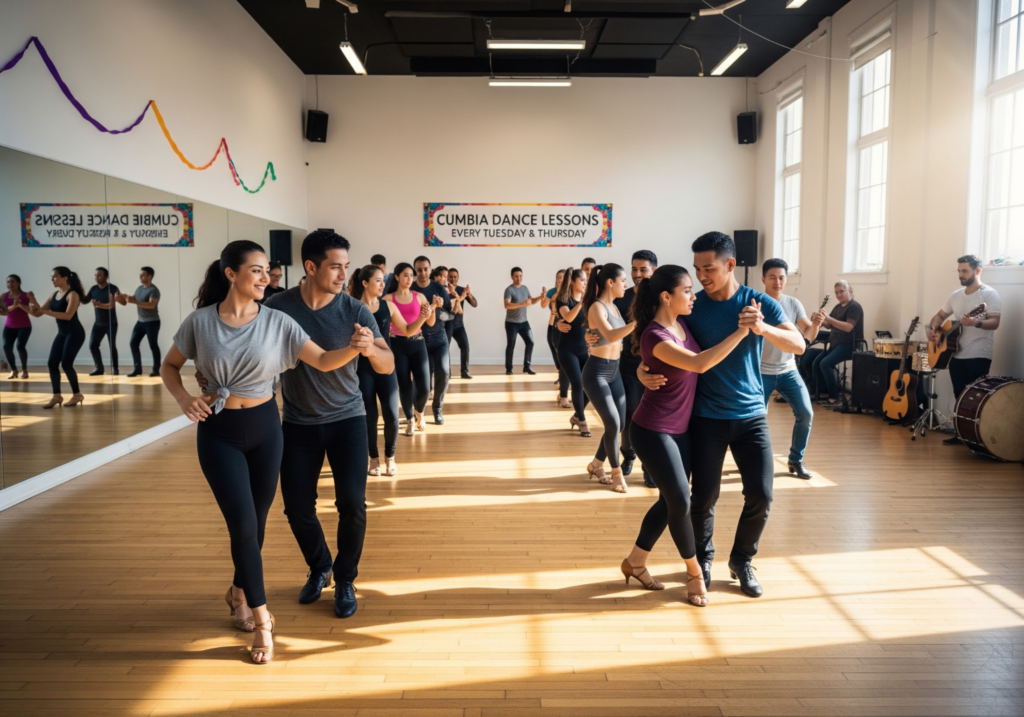
Cumbia dancing has become increasingly popular across the United States, attracting people who want a fun, cultural, and social way to stay active. If you are searching for cumbia dance lessons near you, you are stepping into one of the most welcoming and expressive Latin dance communities.
Cumbia’s smooth rhythm, grounded footwork, and flowing movement make it accessible for beginners while still offering plenty of depth for experienced dancers.
Whether your goal is fitness, social connection, or cultural exploration, cumbia dance lessons give you all three at once.
Understanding Cumbia Dance Fundamentals
Cumbia originated in Colombia’s Caribbean coastal regions, where African, Indigenous, and Spanish traditions merged into a unique musical and dance style. Unlike some Latin dances that focus heavily on fast spins or flashy footwork, cumbia emphasizes rhythm, body flow, and connection between partners.
Traditional cumbia is danced in a circular pattern, with dancers moving smoothly around each other while maintaining a relaxed but grounded posture. The arms are soft and expressive, complementing the footwork rather than overpowering it.
In most modern cumbia dance classes, students begin by learning the signature side-to-side step. This movement is done with slightly bent knees, creating the signature “cumbia bounce” that keeps the dancer in rhythm with the music. While the step looks simple, proper weight transfer, timing, and posture take practice and guidance from a trained instructor.
Why Cumbia Is One of the Best Latin Dances to Learn
Cumbia is one of the most beginner-friendly Latin dances. Unlike salsa or bachata, which can feel intimidating with fast spins and complex patterns, cumbia focuses on flow, connection, and rhythm.
Physically, cumbia delivers a solid workout without being overwhelming. The constant stepping, weight shifting, and body movement improve cardiovascular endurance, coordination, and flexibility. Over time, dancers also develop stronger leg muscles, better balance, and improved posture.
Mentally, cumbia offers something just as valuable. The rhythmic repetition and musical focus create a meditative effect that helps reduce stress and anxiety. Many students describe it as “moving therapy” because it forces you to stay present in the music and your body.
Socially, cumbia is a powerful confidence builder. Partner dancing teaches communication, awareness, and trust. You learn how to lead or follow without words, which improves both self-expression and social ease.
What Happens in a Typical Cumbia Dance Class
Most beginner cumbia classes follow a structured but relaxed format. Classes usually last between 60 and 90 minutes and include warm-ups, technique drills, partner practice, and social dancing.
A standard learning progression looks like this:
- Foundations: basic step, rhythm, posture, and weight transfer
- Partner connection: learning how to lead and follow smoothly
- Turns and transitions: simple rotations and direction changes
- Styling: arm movement, body flow, and musical interpretation
Instructors break movements down slowly so students understand how and why each step works. As confidence grows, classes introduce more complex combinations and musical phrasing.
Good studios also include rotation, allowing students to dance with multiple partners. This speeds up learning and prevents people from becoming dependent on just one partner’s timing or habits.
How to Choose the Right Cumbia Dance Program
Not all dance studios teach cumbia properly. Some mix it casually into general Latin dance classes without respecting the style’s roots. If you want real results, you need a program that treats cumbia as its own discipline.
Here is what actually matters when choosing a studio:
- Instructor experience: Look for teachers trained specifically in cumbia, not just general Latin dance.
- Class size: Smaller groups mean more individual feedback and faster improvement.
- Structured levels: A good program offers beginner, intermediate, and advanced classes so you are not thrown into moves you are not ready for.
- Atmosphere: A welcoming, non-judgmental environment is essential, especially for beginners.
Avoid studios that rush through fundamentals or push choreography without teaching proper technique. That creates sloppy dancers who never develop real control or musicality.
What You Need to Start
You do not need fancy gear to begin learning cumbia. Wear comfortable clothes that allow free movement. For shoes, smooth-soled sneakers or dance shoes are ideal because they let your feet glide rather than stick to the floor.
What matters far more than your outfit is consistency. One class a month will not get you anywhere. Two to three classes per week, even short ones, will change your dancing fast.
Practicing at home for just 10–15 minutes a day makes a huge difference. Repeating the basic step and listening to cumbia music trains your body and ear at the same time.
Final Thoughts
Cumbia dance lessons offer far more than just learning a few steps. They give you physical fitness, mental clarity, cultural connection, and a new social world. The dance is easy to enter but endlessly deep, which is why so many people stick with it for years.
If you want a dance style that is authentic, joyful, and practical for real-world social dancing, cumbia is one of the smartest choices you can make.
Frequently Asked Questions (FAQs)
What is cumbia dance and where did it originate?
Cumbia is a traditional Latin dance that originated in Colombia. It blends African, Indigenous, and Spanish influences and is known for its rhythmic steps and flowing movements.
Who can take cumbia dance lessons?
Cumbia lessons are suitable for all ages and skill levels. Beginners can start with basic steps, while experienced dancers can focus on technique and styling.
How can I find quality cumbia dance lessons near me?
Quality lessons can be found at local dance studios, cultural centers, community classes, or through experienced independent instructors offering in person or online sessions.
What should I look for in a good cumbia dance instructor?
A good instructor should have strong knowledge of cumbia styles, clear teaching methods, patience, and experience working with students at different skill levels.
Are cumbia dance lessons available for beginners?
Yes, many instructors offer beginner friendly classes that focus on basic footwork, rhythm, and partner coordination before moving to advanced patterns.
Do I need a dance partner to join cumbia classes?
Most cumbia classes do not require a partner. Many instructors rotate partners or teach solo techniques during lessons.
What should I wear to a cumbia dance class?
Comfortable clothing and shoes that allow easy movement are recommended. Shoes with smooth soles help with turning and footwork.
How long does it take to learn cumbia dance basics?
With regular practice, beginners can learn basic cumbia steps and rhythm within a few weeks. Progress depends on consistency and individual learning pace.
Are private cumbia dance lessons better than group classes?
Private lessons offer personalized attention, while group classes provide social interaction and partner practice. The best option depends on personal goals and learning style.
Can cumbia dance lessons improve fitness and coordination?
Yes, cumbia dancing improves cardiovascular fitness, balance, coordination, and flexibility while also being enjoyable and stress relieving.
Are online cumbia dance lessons effective?
Online lessons can be effective for learning fundamentals and practicing at home, especially when taught by experienced instructors with structured programs.
How much do cumbia dance lessons usually cost?
Costs vary based on location, instructor experience, and class format. Group classes are generally more affordable than private lessons.
Read More : https://softrop.com/?s=Education